 by 2meo6admin01
Why Headless E-commerce Is Revolutionizing Online Stores
In Morocco’s e-commerce landscape, customer expectations have intensified : speed, fluidity, and personalization are now essential. A slow or rigid store can lose visitors in seconds. Yet, many businesses still rely on traditional “monolithic” architectures (classic CMS) where the front end (what users see) and the back end (product and order management) are tightly coupled. This setup can limit performance, flexibility, and scalability.
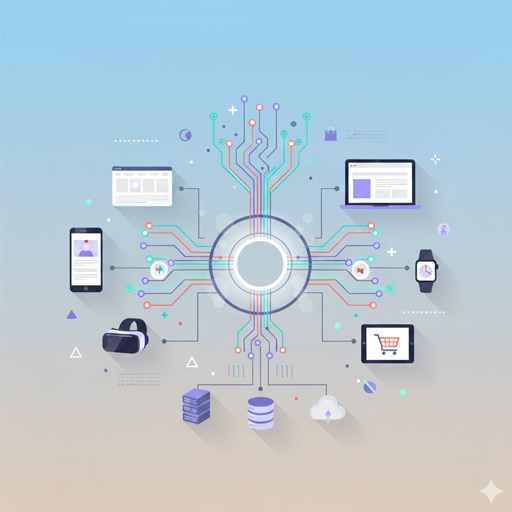
The “headless” approach offers another path: separating the front end from the back end so they communicate via APIs. This allows for more design freedom, faster loading times, and a tailor-made user experience. In this guide, we’ll explore the differences between traditional CMS and headless architectures, how this separation enhances speed, security, and flexibility, the modern technologies compatible with Prestashop and WordPress, the impact on mobile performance, and how headless systems enable personalized interfaces for each user type.
Traditional CMS vs. Headless Model
With a traditional CMS like Prestashop or WooCommerce, the front end and back end are tightly integrated: the visual layer, product data, and cart logic are all interconnected. Changing your theme or installing a plugin can affect the entire management system (orders, stock, etc.). This monolithic structure limits flexibility, makes updates risky, and can slow down your store.
In contrast, a headless model decouples the front end (user interface) from the back end (catalog and order management). The front end retrieves data via APIs without integrating the management logic. This means you can modify or improve the visual interface without touching the backend. For example, you can keep Prestashop or WordPress as your content engine while building a modern front end in Next.js or Vue Storefront.
This separation brings design freedom, fewer plugin conflicts, and better adaptability to new technologies. In short, it gives you agility without losing backend control.
Front/Back Separation: Speed, Security, and Flexibility
Speed and Performance
When the front end operates independently, you can optimize it without altering the back end. You can serve pages via CDN, preload content, or generate static pages. The initial rendering becomes faster crucial for mobile users in Morocco or areas with moderate connectivity.
Security
Separating layers reduces entry points to the backend. The front end acts as a shield with no direct database access. APIs can be secured, restricted, and isolated reinforcing overall site protection.
Flexibility and Personalization
A decoupled front end enables custom experiences for different audiences: loyal clients, B2B visitors, or first-time shoppers. You can test new designs and user flows without impacting internal systems. Plus, you can reuse the same backend for mobile apps, kiosks, or other digital channels.
Modern Stacks Compatible with Prestashop or WordPress
Several modern technologies are ideal for building headless interfaces:
- Next.js (React-based): Supports server-side rendering (SSR) and static site generation (SSG), allowing API data integration with SEO-friendly performance.
- Vue Storefront: A headless, platform-agnostic front end compatible with Prestashop, Magento, and more. It offers ready-to-use e-commerce components.
- Headless WordPress: Keep WordPress as a content manager while delivering content through modern front ends via REST or GraphQL APIs.
You can combine these with a traditional backend. For instance, keep Prestashop for catalog management while using Vue Storefront or Next.js as the client interface connected through Prestashop’s API. This gives you the best of both worlds.
Faster Loading and Optimized Mobile Experience
In Morocco, where most users browse via smartphones, speed is non-negotiable. Headless e-commerce delivers lightweight, fast-loading versions focused on essentials optimized images, progressive loading, and efficient scripts.
Through server-side rendering or static generation, users and search engines receive a fully loaded version instantly, without waiting for JavaScript. This improves Core Web Vitals (Largest Contentful Paint, First Input Delay, etc.), which Google now considers in rankings. A well-built headless store is therefore faster, smoother, and better ranked than a traditional one.
Custom Interfaces for Every User
One of the biggest advantages of headless is the ability to tailor the interface to each user profile. You can create:
- A minimalist and fast layout for mobile visitors
- An enriched interface with personalized recommendations for returning customers
- Specialized pages for B2B clients (bulk orders, special pricing, custom dashboards)
The front end queries the backend based on context (user type, device) to display the most relevant version. This enhances the user experience, strengthens engagement, and can increase conversions.
Challenges to Anticipate
Adopting a headless setup requires technical expertise (developers familiar with Next.js, Vue, APIs), a larger initial budget, and careful SEO management (server-side rendering, static generation, meta tags). Some Prestashop modules or UI features may not work directly in a headless environment, requiring custom rebuilds.
However, despite these challenges, the return on investment in performance, flexibility, and user experience can be significant, especially for ambitious online stores.
The headless model represents a natural evolution for e-commerce businesses seeking to break free from traditional architectures. By decoupling the user interface from the backend logic, you gain speed, security, flexibility, and personalization key components of a strong digital strategy in Morocco.
At 4Tech Lab, a web agency based in Agadir, we support Moroccan brands in their digital strategies by leveraging our expertise in front-end and back-end integration. We help assess technical needs, optimize interfaces, and structure e-commerce projects for performance, speed, and user focus. While we don’t directly build headless architectures, our know-how lays the strong foundations your project needs to reach its full potential.