 by 2meo6admin01
CI/CD for Moroccan web projects: why adopt it?
Web development is no longer limited to writing code and putting it online once the project is completed. Today, digital projects evolve continuously through new features, bug fixes, performance optimizations, and security updates. In this context, the way code is delivered has become just as important as the code itself.
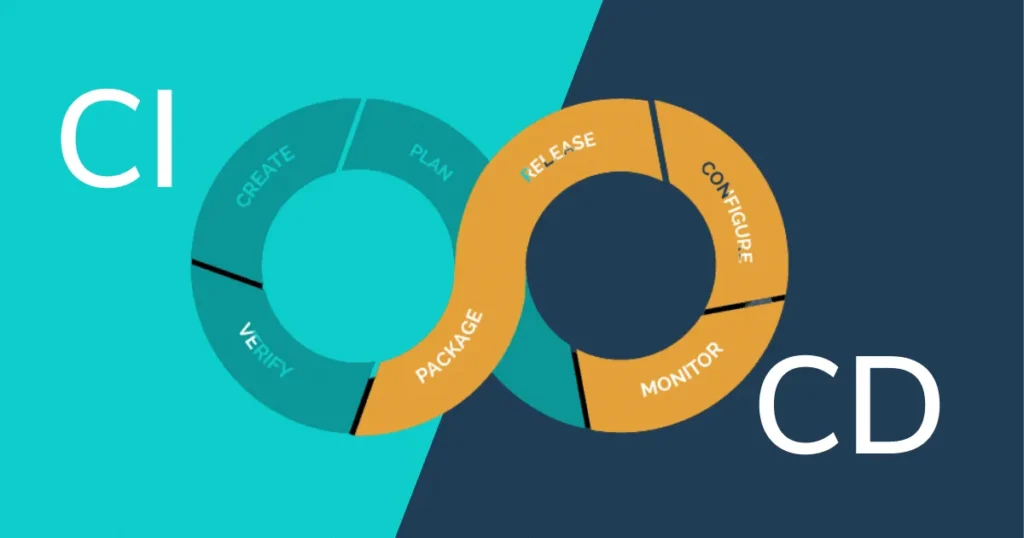
This is exactly where Continuous Integration and Continuous Deployment, commonly referred to as CI/CD, come into play. Long reserved for large technology companies, these practices are becoming increasingly accessible and relevant for Moroccan web projects, whether they involve startups, small and medium sized businesses, or growing digital platforms.
Understanding CI/CD enables companies to gain reliability, speed, and quality while reducing the risks associated with production releases.
Understanding the Basics of CI/CD
What Is Continuous Integration (CI)?
Continuous Integration consists of regularly integrating code changes into a central repository. Each new addition or modification automatically triggers a series of checks, including tests, quality controls, security analyses, and application stability verification.
The goal is simple: detect errors as early as possible. Instead of discovering complex bugs at the end of a project, issues are identified as soon as they appear, when they are still easy to fix.
What Is Continuous Deployment (CD)?
Continuous Deployment goes one step further. Once the code has passed all tests, it can be automatically deployed online without manual intervention. This makes it possible to deliver improvements quickly, reliably, and consistently.
In some cases, deployment can be semi automated, with human validation before going live. The key objective is to reduce manual operations, which are often a major source of errors.
Why CI/CD Changes the Way Web Projects Are Managed
Before the adoption of CI/CD, many web projects relied on occasional and often stressful releases. A single deployment error could take a website offline, expose users to visible bugs, or negatively affect search engine rankings.
CI/CD transforms this approach. Updates become more frequent but smaller, and therefore less risky. Every change is tested, validated, and deployed in a controlled environment. The project gains stability and predictability.
For businesses, this means fewer surprises, fewer service interruptions, and better continuity.
Improving Quality for Moroccan Web Projects
Quality is a central challenge for digital projects in Morocco, where online competition is becoming increasingly intense. An unstable website or frequent downtime can seriously damage a company’s credibility.
With CI/CD, code quality is continuously monitored. Automated tests ensure that new features do not break existing functionality. Errors are corrected before they reach users.
This approach is particularly valuable for e-commerce platforms, institutional websites, and business applications, where reliability is critical.
Faster Releases Without Compromising Security
One of the main advantages of CI/CD is speed. Teams can release updates more frequently without long manual validation phases. This allows companies to respond quickly to market demands, user feedback, or regulatory changes.
Contrary to common belief, this speed does not compromise security. On the contrary, CI/CD pipelines often include automated security checks, such as dependency analysis and known vulnerability detection.
For Moroccan companies, this creates a valuable balance between agility and reliability.
Reducing Dependence on Human Intervention
Manual deployments often rely on one or two key individuals. In case of absence, error, or incorrect manipulation, the entire project can be blocked.
CI/CD significantly reduces this dependency. Processes are documented, automated, and repeatable. Any team member can understand how the code is tested and deployed.
This standardization is a major advantage for growing companies and small technical teams, which are very common in the Moroccan digital landscape.
Better Collaboration Between Teams
CI/CD encourages smoother collaboration between developers, designers, project managers, and technical teams. Everyone works on smaller and more frequent versions of the product, making communication and adjustments easier.
Problems become visible more quickly, responsibilities are clearer, and validation cycles are shorter. The project progresses continuously instead of moving in irregular phases.
This organization is particularly well suited to agile methodologies, which are increasingly adopted in modern web projects.
CI/CD and Website Performance
Performance is now a key success factor for any website. A slow or unstable site directly impacts user experience and search engine visibility.
With CI/CD, performance optimizations can be tested and deployed regularly. It becomes easier to improve loading speed, optimize resources, or fix technical issues without waiting for a complete redesign.
Over time, this continuous improvement contributes to the website’s durability and competitiveness.
An Approach Adapted to the Moroccan Context
In Morocco, many companies still hesitate to adopt practices like CI/CD due to perceived complexity. However, these tools are now widely democratized and suitable for projects of all sizes.
Even a simple corporate website or content platform can benefit from a basic level of automation. The goal is not to automate everything from the beginning, but to establish solid foundations and evolve progressively.
This gradual approach aligns perfectly with the budgetary and organizational realities of Moroccan businesses.
Anticipating Growth and Future Evolution
A web project is never static. It evolves alongside the company, user behavior, and technological changes. Implementing CI/CD from the early stages helps anticipate this evolution.
As traffic grows, new features are added, or teams expand, the processes are already in place. The project can scale without losing quality or causing a significant increase in costs.
This makes CI/CD a strategic investment that proves especially valuable in the medium and long term.
Conclusion
Continuous Integration and Continuous Deployment are no longer reserved for large international platforms. They now represent a concrete opportunity for Moroccan web projects seeking greater quality, reliability, and agility. By automating testing and deployments, CI/CD reduces risks, improves collaboration, and supports sustainable growth in a constantly evolving digital environment.
Within this dynamic, 4Tech Lab positions itself as an actor committed to modern development best practices, favoring structured, maintainable, and future ready web projects. Without unnecessary complexity, the objective remains the same: building solid digital platforms tailored to the Moroccan market and aligned with current technical standards.