 by 2meo6admin01
SEO: Why internal linking outperforms link building
In SEO, link building is often presented as the number one lever to improve a website’s visibility. Many companies invest time and budget into acquiring backlinks, sometimes at the expense of a much more fundamental lever: internal linking. In practice, however, a well-structured internal linking strategy can deliver faster, more stable, and more controllable results than link building, especially when a website already has existing content.
Internal linking operates at the very core of a website. It structures information, guides search engines, strengthens strategic pages, and improves the user experience. Unlike link building, it does not rely on any external actors and can be optimized continuously. This is what makes it a frequently underestimated yet extremely powerful SEO lever.
Understanding the Difference Between Internal Linking and Link Building
Two Complementary but Very Different SEO Levers
Link building relies on links coming from external websites. These links primarily send signals of credibility and popularity to search engines. The more high-quality backlinks a website receives, the more it is perceived as an authority in its field.
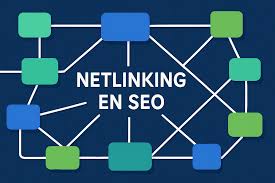
Internal linking works differently. It consists of connecting pages within the same website to create a logical and understandable structure. These internal links are not just for navigation: they tell Google how content is related, which pages are central, and which topics are a priority.
One Major Difference: Full Control
The main advantage of internal linking lies in control. A company can decide when, how, and which pages to link internally. Link building, on the other hand, depends on external factors: partners, platforms, media outlets, budgets, and sometimes risky practices.
This level of control makes internal linking far more reliable in the long term.
Why Internal Linking Is Often Underestimated
A Less Visible but Fundamental Lever
Internal linking does not produce an immediate, spectacular effect like a backlink from a highly authoritative website. It works more gradually and at a deeper level. This is often why it is overlooked.
Yet without a coherent internal linking structure, even a website with many backlinks can see its performance limited. Search engines need a clear structure to properly leverage the popularity a site receives.
A Complexity That Is Often Misunderstood
Creating an internal link may seem simple, but designing an effective internal linking strategy is a strategic task. It requires careful thinking about site architecture, search intent, content hierarchy, and user journeys.
A poorly designed internal linking structure can dilute SEO impact instead of strengthening it.
Internal Linking as a Tool for Google’s Understanding
Making Site Crawling Easier
Search engine crawlers explore a website by following links. If certain pages are poorly linked or too deep in the structure, they risk being under-crawled or even ignored.
A strong internal linking strategy ensures that all important pages are easily accessible, without relying solely on the main menu or footer.
Giving Meaning to the Site Structure
Through internal linking, Google understands which pages are primary and which are secondary. Pages that receive the most contextual internal links are interpreted as more important from a thematic perspective.
This understanding directly influences rankings for strategic keywords.
Intelligently Distributing Internal SEO Value
Leveraging the Strength of High-Performing Pages
Some pages naturally attract more traffic or external links. Internal linking makes it possible to redistribute this value to more strategic but less visible pages, such as service or commercial pages.
This is an effective way to improve overall site performance without creating new content.
Avoiding Internal Imbalances
Without a linking strategy, some pages accumulate strong authority while others remain weak. A well-thought-out internal linking structure helps smooth out these gaps and strengthen the website as a whole.
A Direct Impact on User Experience
Structuring Natural User Journeys
A well-designed internal linking structure guides users step by step based on their needs. It offers complementary content at the right time, without disrupting the reading experience.
This makes navigation more intuitive and seamless.
Strengthening Engagement and Credibility
When users easily find answers to their questions through internal links, they perceive the website as more serious and trustworthy. They stay longer, view more pages, and interact more.
These behavioral signals indirectly benefit organic search performance.
Why Internal Linking Can Be More Powerful Than Link Building
More Predictable Results
Link building depends on the quality and stability of acquired links. A link can disappear, lose value, or become toxic. Internal linking, by contrast, is durable and adjustable at any time.
This allows for continuous optimization with minimal risk.
An Essential Foundation Before Any Link Acquisition
A poorly structured website never fully benefits from link building. Internal linking acts as an internal distribution network: without it, the value brought by external links is poorly exploited.
Common Internal Linking Mistakes
Linking Without Semantic Logic
One of the most common mistakes is adding internal links simply to “add links,” without considering the real semantic relationship between pages. An internal link is not just a technical element: it represents a semantic connection between two pieces of content. When the link lacks coherence with the topic being discussed, it confuses both users and search engines.
For users, this type of link creates confusion. They click expecting to deepen a specific point and end up on a page unrelated to their original intent. This break in the journey harms content comprehension and can lead to an early exit from the site.
For Google, the impact is just as negative. Anchor text helps search engines understand the topic of the target page. Poorly contextualized or overly generic links send unclear signals. As a result, the engine struggles to identify the site’s core topics and rank pages for the right keywords. Over time, internal linking loses its structuring role and weakens the site’s overall semantic relevance.
Effective internal linking relies on links that are naturally integrated into the content, extend the reading experience, and provide real informational value.
Neglecting Strategic Pages
Another frequent mistake is overlooking high-value business pages, such as service pages, solution pages, or conversion-focused pages. Many websites have blog articles that are well interlinked, while their most commercially important pages remain isolated, with few or no internal links pointing to them.
This imbalance significantly limits their SEO potential. Even if a page is well designed, technically optimized, and relevant, it will struggle to rank if it does not receive enough internal signals. Google may then interpret it as secondary or marginal within the site’s ecosystem.
From a user perspective, the issue is just as critical. If strategic pages are not integrated into natural navigation paths, users may consume a lot of content without ever being guided toward a clear action, such as contacting the company, requesting a quote, or discovering an offer. The website then loses commercial effectiveness.
An effective internal linking strategy must intelligently connect informational content to strategic pages, creating logical bridges between information and conversion. This overall coherence is what allows a website to perform both in SEO and in business terms.
A Particularly Relevant Lever for the Moroccan Market
For Moroccan businesses, internal linking is an accessible, cost-effective, and sustainable strategic lever. It improves visibility without relying exclusively on link building campaigns that are often expensive or difficult to execute locally.
In competitive markets, a well-structured website can outperform competitors with more backlinks but poor organization.
Conclusion
Internal linking is far more than a simple technical adjustment. It is a core strategy that influences how Google understands a website, how SEO value circulates internally, the user experience, and overall performance. When done properly, it can deliver stronger and more sustainable results than link building alone.
This long-term, structure-driven, and performance-focused approach is at the heart of 4Tech Lab’s philosophy. By supporting businesses in designing websites as true digital products and emphasizing architecture, code quality, and internal linking logic, 4Tech Lab helps clients build platforms capable of performing sustainably in the Moroccan market and beyond.