
 by 2meo6admin01
How to Launch Your E-commerce Website from Agadir and Sell Across Morocco?
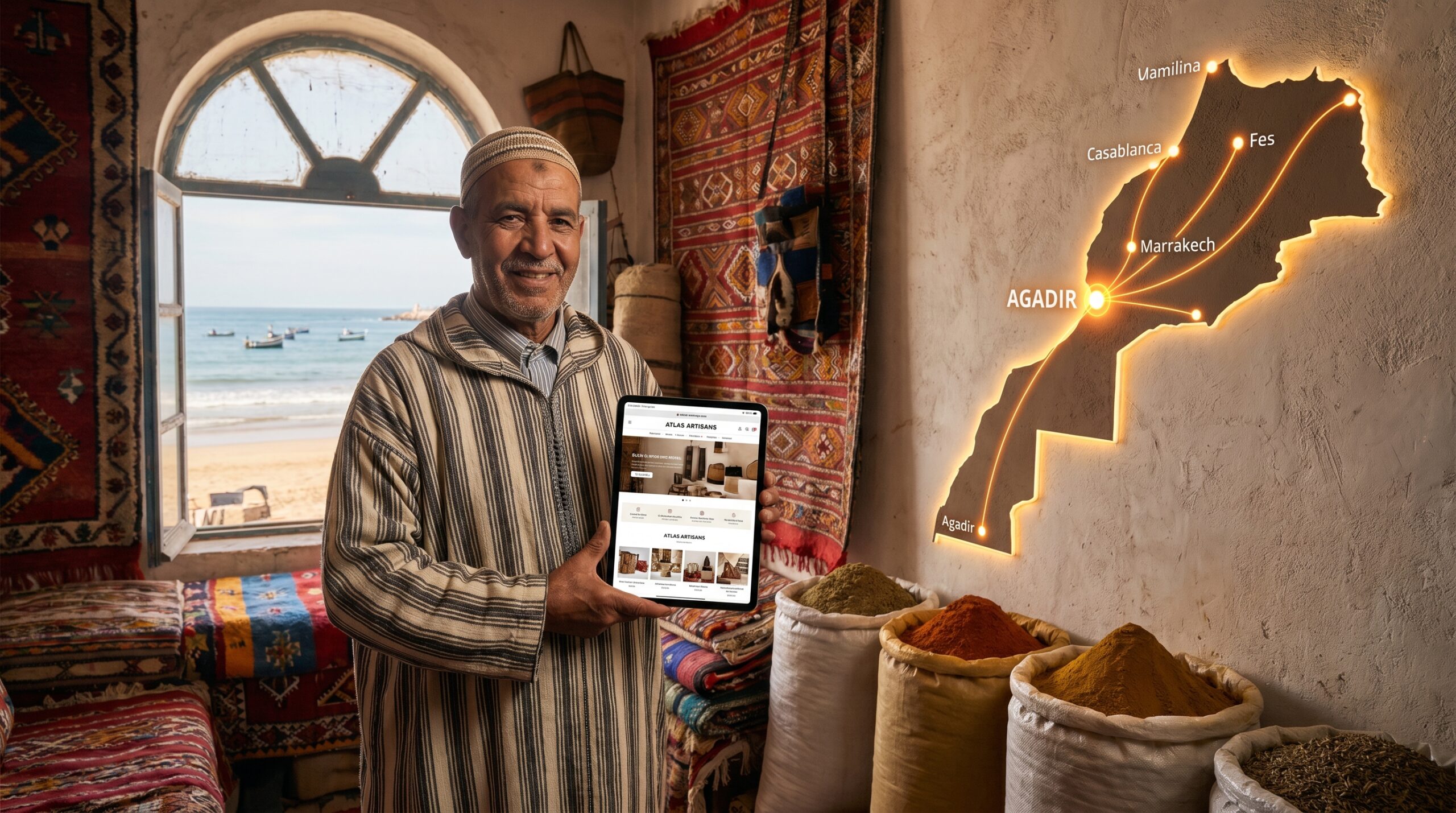
As a merchant, artisan, or distributor in Agadir, your physical store is your pride. But it has one major limitation: its catchment area. You depend on foot traffic, opening hours, and tourist seasonality.
What if your storefront stayed open 24/7, accessible to millions of potential customers from Tangier to Lagouira?
Launching an e-commerce site in Agadir is no longer a technical luxury reserved for big brands. Today, it’s the most direct growth lever to multiply your revenue. Yet stepping into online sales raises dozens of legitimate questions: which platform to choose? How to manage online payments? And what about delivery?
No need to worry. Here’s the practical, reassuring guide to simplify your transition to e-commerce and turn your project into a sales machine.
Step 1: Choosing the Technology (WooCommerce or PrestaShop?)
The core of your online store is its technological “engine” (the CMS). Forget the complex jargon—here’s what you need to know to make the right choice:
- WooCommerce (via WordPress): The most popular solution worldwide. Ideal if you have a medium-sized catalog. Highly flexible, it offers an excellent base for SEO (Google ranking) and allows easy addition of features.
- PrestaShop: A pure e-commerce solution, particularly robust if you manage thousands of products, complex variations (sizes, colors), and advanced multi-warehouse stock management needs.
4Tech Tip: Don’t be tempted by rental solutions (like Shopify) that charge commissions on every sale. Choose an Open Source solution where you remain the exclusive owner.
Step 2: Managing Payments (CMI, Stripe, and Cash on Delivery)
This is the number one concern for Moroccan merchants: how to get paid securely? A successful online store must adapt to consumer habits:
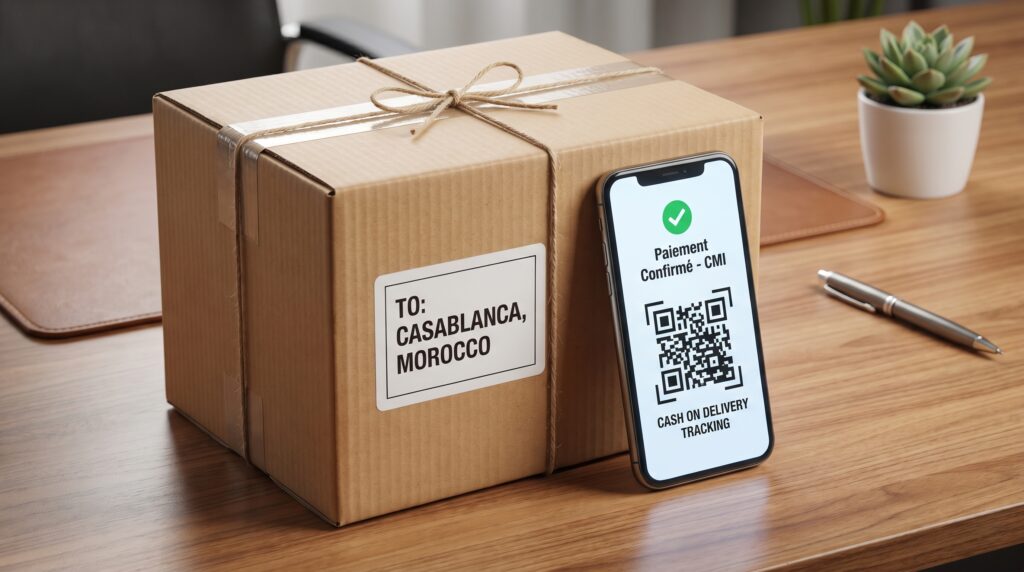
- Card Payment (CMI): Essential to build credibility. Integrating the Centre Monétique Interbancaire (CMI) allows customers to pay securely with Moroccan or international cards.
- Stripe or PayPal: Perfect if you target foreign customers (tourists, expats) wanting to buy your products (crafts, cosmetics) from Europe or America.
- Cash on Delivery (COD): An unavoidable reality of the Moroccan market. Your site must be optimized to quickly capture COD orders, with confirmation processes (via WhatsApp or SMS) to reduce returns.
Step 3: Logistics (Delivering Your Products Across the Kingdom)
E-commerce success depends 50% on logistics. Selling from Agadir to Casablanca or Oujda requires smooth organization.
Today, software integration (API) allows your online store to connect directly with Morocco’s main carriers (Amana, CTM Messagerie, Aramex, or specialized e-commerce logistics providers). As soon as a customer validates their cart, the delivery slip is automatically generated, saving you precious time.
4Tech Lab: Your Partner for Highly Profitable E-commerce
Creating an online store is one thing. Designing it to actually sell is another.
An e-commerce site that doesn’t convert visi tors into buyers is a wasted investment. You need to optimize loading speed (a slow site drives customers away), mobile user experience (80% of purchases in Morocco happen on smartphones), and visual reassurance.
That’s where 4Tech Lab comes in. From our offices at Agadir Technopark, our engineers don’t just configure software. We design tailor-made e-commerce environments, ultra-fast and built end-to-end to maximize your conversion rate.
We support you with CMS selection, payment gateway integration (CMI), and training your teams to manage orders.