 by 2meo6admin01
Why copying major websites is a strategic mistake
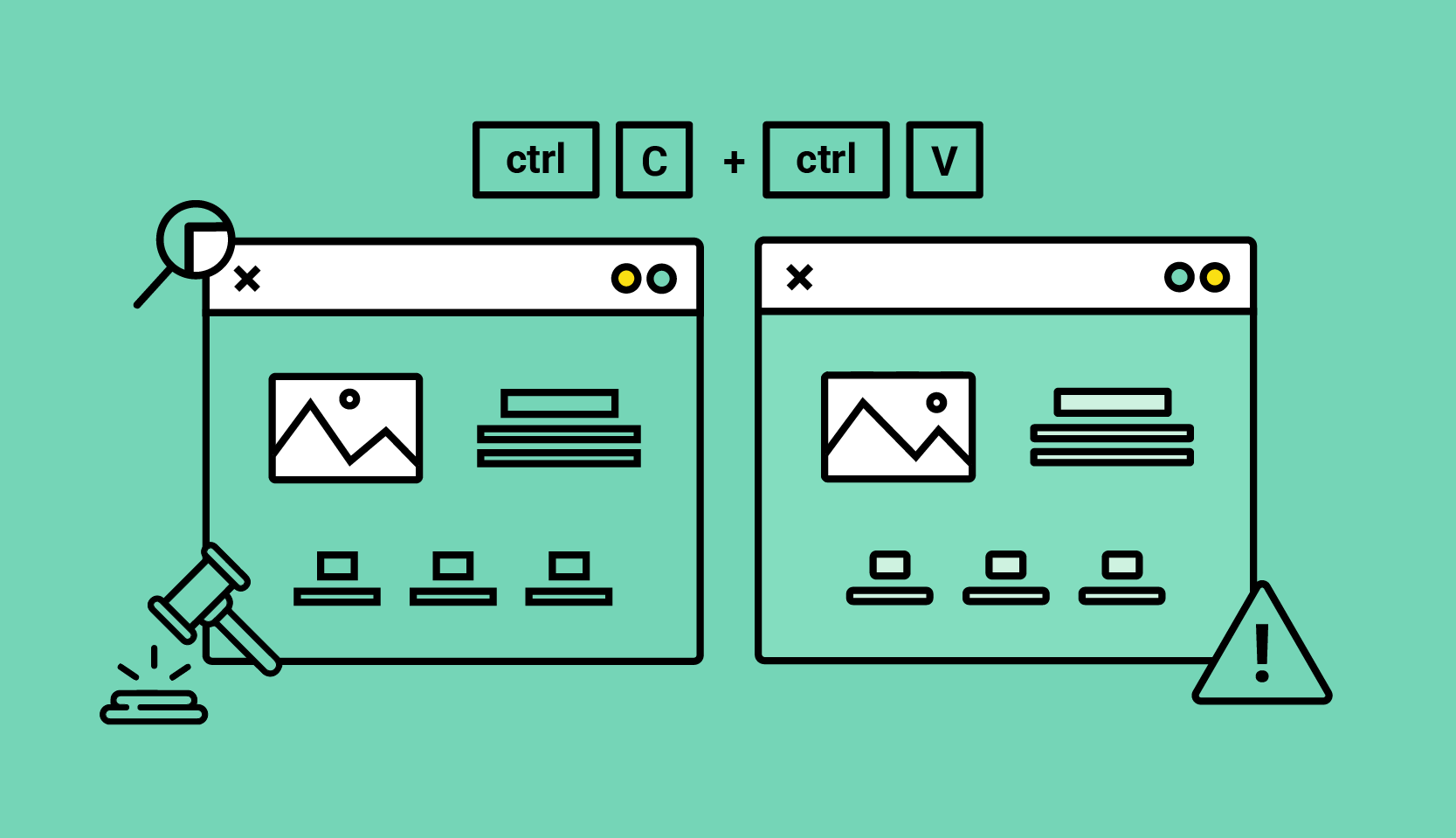
In many web projects, a recurring temptation appears: taking inspiration from, or even replicating, the structure or design of major international websites. Global e-commerce platforms, SaaS giants, well-known marketplaces these references are often seen as symbols of success. Yet copying large websites is rarely a sound strategic decision, especially for local businesses or companies in a growth phase.
A website is not a universal showcase. It is a tool built for a specific context: an audience, business objectives, technical constraints, and a defined market. What works for a global leader can quickly become counterproductive for an SME, a startup, or a Moroccan company.
Large Websites Are Built for Very Specific Realities
Exceptional Technical Resources
Large websites rely on sizable technical teams, often structured into specialized units: performance, security, UX, data, infrastructure, and technical SEO. Their platforms are the result of hundreds, sometimes thousands, of hours of development and continuous optimization.
Copying their architecture or features without having the same resources often leads to heavy, unstable, and hard-to-maintain websites. An interface that appears simple on the surface may be supported by significant technical complexity behind the scenes.
Incomparable Budgets and Constraints
Major platforms invest substantial budgets in their websites, from initial design to maintenance, monitoring, and continuous improvement. Their business models allow them to absorb this complexity.
For companies with controlled budgets, trying to replicate this level of sophistication can quickly become a limitation: extended timelines, unexpected costs, technical dependency, and difficulty evolving the site over time.
An Impressive Design Is Not Always an Effective Design
The Trap of Spectacular Design
Large websites often rely on rich, animated, highly visual interfaces. This type of design works in contexts where the brand is already well established and users are willing to tolerate a certain level of complexity.
For a website whose goal is to convince, inform, or generate leads, an overly complex design can harm clarity. Too many animations, sections, or visual effects distract users from the core message.
User Experience Depends on Context
A Moroccan user looking for a local service, specific information, or quick contact does not have the same expectations as a user of a global platform. Copying the UX of a large website without considering local usage patterns can create frustration instead of value.
Good design is not about impressing users, but about helping them reach their goal quickly and effortlessly.
Copying a Website Often Means Copying Its Constraints
Invisible but Very Real Complexity
Behind large websites lie complex technical layers: advanced caching systems, microservices, fine-grained permission management, and custom internal tools. By copying the visible surface, companies often inherit constraints that are difficult to manage.
The result is a site that looks modern but becomes slow to load, hard to debug, or fragile during updates.
Heavier Long-Term Maintenance
The more complex a site is, the more expensive it becomes to maintain. Copying advanced features without a real business need increases technical overhead without delivering proportional value.
In the long run, this complexity slows down evolution and sometimes forces teams to rebuild the site sooner than expected.
A Copied Strategy Is Never an Aligned Strategy
Every Business Has Different Goals
Large websites often aim to maximize time spent, retention, or large-scale data collection. A local business may instead focus on more direct objectives: contact requests, quotes, credibility, or local visibility.
Copying a structure designed for different goals pulls the website away from its core mission.
Brand Identity Gets Lost
By reproducing the visual and functional patterns of major players, a company loses differentiation. The website becomes generic, lacking a unique personality, which weakens positioning.
An effective website should reflect the company’s reality, culture, message, and value proposition — not that of an international player disconnected from its market.
Negative Impact on SEO and Performance
Technical Choices That Hurt SEO
Some large websites use heavy technical solutions, offset by strong brand authority and extensive SEO resources. For smaller websites, those same choices can hurt indexing, loading speed, and search engine readability.
Copying without adaptation can therefore reduce visibility rather than improve it.
Degraded Perceived Performance
Performance is not only about raw speed. It also involves stability, clarity of navigation, and fast access to information. Overly complex websites often feel slow, even when performance tools show acceptable scores.
Smart Inspiration Instead of Blind Copying
Understand Before Imitating
Taking inspiration from a large website can be useful, as long as the reasons behind certain choices are understood and evaluated for relevance. The goal is not replication, but adaptation.
Analyzing user journeys, message clarity, or information hierarchy is far more effective than copying a specific design or feature.
Build a Website That Matches Your Digital Maturity
A website should evolve alongside the business. Starting with a simple, solid, and clear foundation creates long-term stability. Advanced features should be added only when they respond to real needs, not to imitate market leaders.
A Tailored Approach Is More Effective in the Long Run
The true performance of a website is not measured by how closely it resembles major platforms, but by how well it achieves its objectives. A well-designed site aligned with its audience and resources will always outperform an ambitious but poorly controlled copy.
In the Moroccan context, where businesses operate under very diverse realities, adaptation, simplicity, and clarity are far more powerful levers than imitation.
Copying large websites may feel reassuring, but it is often a strategic mistake. Every web project has its own constraints, goals, and users. Success does not come from reproducing international models, but from building a coherent, scalable website aligned with the company’s real needs.
This is the philosophy behind 4Tech Lab, which supports businesses in designing web platforms built as durable and effective tools rather than replicas of existing models. By prioritizing clarity, performance, and alignment with real-world needs, 4Tech Lab helps its clients build websites that truly serve their strategy, both in the Moroccan market and beyond.